
| Neil & Wendy Cycle EuroVelo6 | ||
| Previous Page | Menu | Next Page |
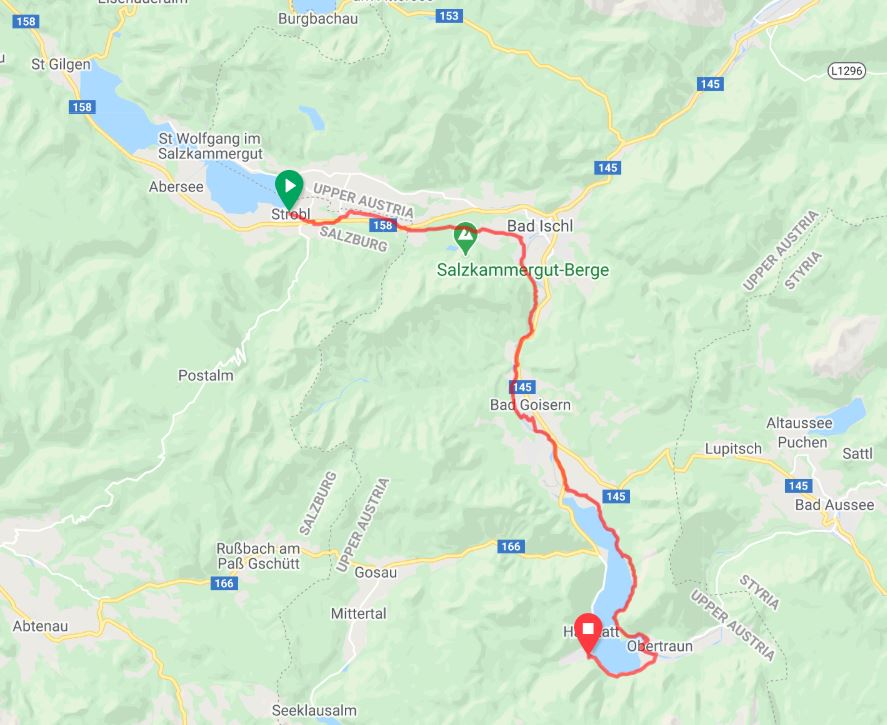
| St Wolfgang to Hallstadt | ||
31st May 2016 | ||
|
Hallstatt is a small town in the district of Gmunden, in the Austrian state of Upper Austria. Situated between the southwestern shore of Hallstätter See and the steep slopes of the Dachstein massif, the town lies in Salzkammergut region, on the national road linking Salzburg and Graz. It is known for its production of salt, dating back to prehistoric times, and gave its name to the Hallstatt culture, the archaeological culture linked to Proto-Celtic and early Celtic people of the Early Iron Age in Europe, c. 800–450 BC. The social situation among the salt workers was generally better than in other economic areas. A hospital for the sick and needy was here in the 16th century, and around 1565 the workers had the benefit of gratis medical aid. The miners and lumberjacks were obliged to spend the working week, from Monday morning to Saturday evening, away from their families at the mine, or in primitive "Holzknechtstuben" (huts) in the forest.
|
||